Chemicals and water
Nylon is considered to have moderate corrosion resistance to weak acids and bases but may degrade if exposed to strong acidic conditions or oxidizing agents, leading to a decline in the material’s mechanical strength. When organic solvents and oils are considered, nylon demonstrates excellent resistance. However, prolonged exposure to strong solvents, such as formic acid, may lead to degradation. Water, and more specifically hydrolysis, represents a significant weakness in nylon’s profile: continued exposure to steam or hot water can break down the polymer chains, thus leading to a loss of strength and toughness. Due to its hygroscopic nature—the ability to absorb moisture from the environment—its long-term performance can be impacted in wet or humid conditions. Changes in dimension, increased flexibility, and reduced tensile strength are the main characteristics affected by moisture absorption.
Heat and UV
Moderate temperature will typically not affect the material’s characteristics; however, long exposure times or high temperatures may accelerate the degradation process, weakening the material and causing it to eventually melt, deform, or degrade. Additionally, low temperatures may cause the material to become more brittle. At high temperatures, thermal oxidation may occur (providing oxygen is present) with the same net effect.
Repeated or continual exposure for long periods to UV radiation causes nylon to lose its mechanical properties and become brittle. This issue can be addressed through the addition of UV stabilizers or the use of protective coatings.
Strength
Nylon demonstrates high tensile strength, making it particularly suitable for mechanical application due to its excellent resistance to abrasion, friction, and impact. Its toughness and semi-crystalline structure help absorb and dissipate the energy during impact, leading to mild deformation rather than fractures, a characteristic that makes nylon highly suitable for dynamic or load-bearing applications. Despite its strength, nylon is a lightweight material, making it ideal for lightweight fabrics and fishing lines.
Nylon is elastic; it can stretch and return to its initial shape when the external stress is removed, making it suitable for applications such as textiles, fibers, and parachutes.
Sustainability
It is important to consider the environmental impact of this material. As a synthetic polymer derived from petroleum, its manufacturing process is energy-intensive, and since the material is non-biodegradable, proper management is crucial to minimize its contribution to plastic pollution.
History
By 1938, the first version—nylon 66—was introduced to the mainstream market. Practical applications soon followed, with toothbrushes featuring nylon-based bristles being the first nylon product to reach the market.
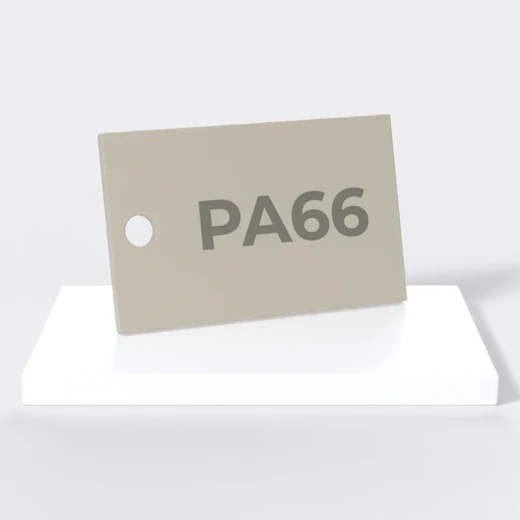
The term nylon is used to describe any synthetic plastic material that belongs to the family of high molecular weight polyamides. These polymers are composed of monomers linked through amide groups (–CONH–). While natural polyamides can be found in materials such as silk and wool, synthetic polyamides include materials such as Kevlar and nylon. What distinguishes these materials and gives them their unique properties are the structure of the monomer, i.e., the individual unit that is sequentially bonded during polymerization, and the average number of units in a macromolecule—also referred to as the degree of polymerization. Nylon is obtained synthetically from the reaction of diamines with petroleum-derived dicarboxylic acids, although methods to obtain nylon from castor oil, a more sustainable process than fossil-based ones, have been reported.
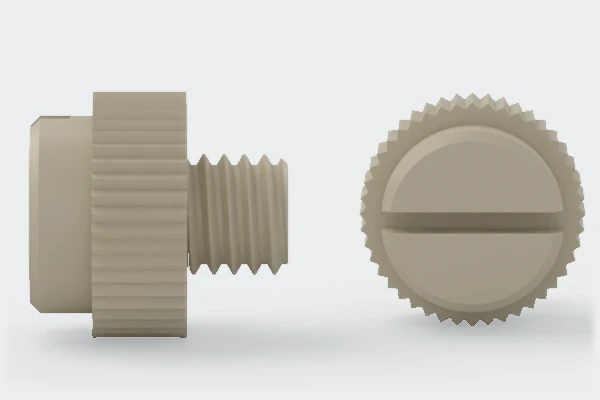
Discover our Nylon / Polyamide 66 collection. With high tensile strength, wear resistance, and excellent electrical insulation properties, these countersunk cross head bolts are a reliable choice.
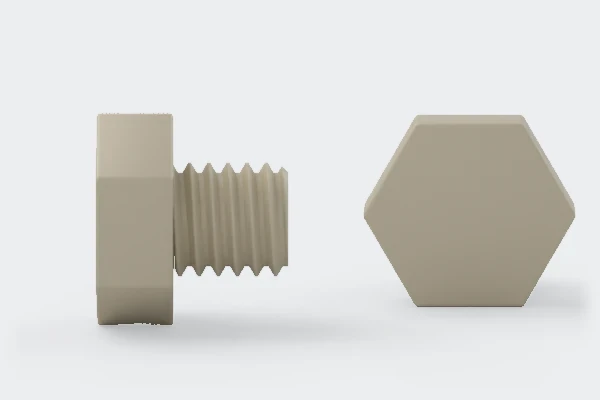
Nylon Hex Bolts (PA66)Nylon hex head bolts made from PA66 deliver high tensile strength, excellent wear resistance, and insulation. Ideal for non-corrosive, lightweight fastening.
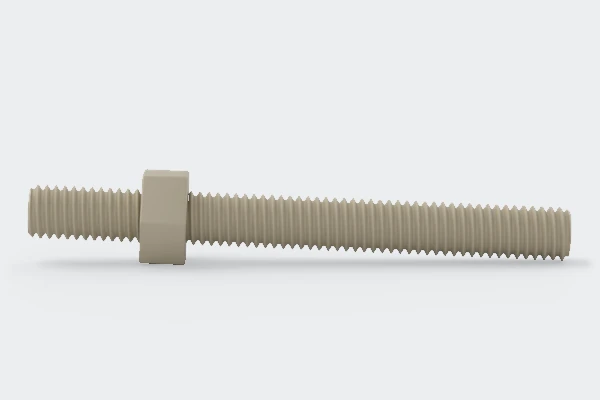
Nylon Plastic Bolts, Nuts & WashersExplore nylon / polyamide 66 plastic bolts, nuts, and washers, ideal for applications needing non-metallic, corrosion-resistant fastening solutions. Available in black and natural, these durable fasteners include butterfly screws, socket head bolts, countersunk bolts, and pan head options.