History
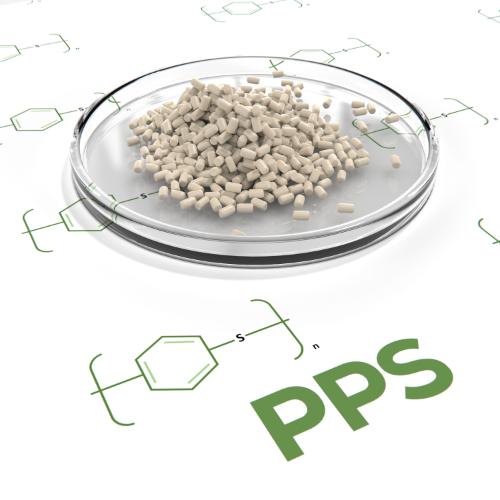
German chemist Hermann Staudinger discovered polyphenylene sulfide (PPS) in 1888 during his groundbreaking studies on macromolecules, which subsequently earned him the Nobel Prize in Chemistry. At the time, however, the polymer did not exhibit sufficient stability for industrial applications. PPS gained commercial significance 70 years later when Phillips Petroleum independently developed a refined process that enhanced the material’s stability, transforming it into the thermoplastic known today as “the polymer that doesn’t melt.” Recognizing the commercial potential of PPS as a high-performance thermoplastic, the company established an optimized synthesis route involving the reaction of sodium sulfide with 1,4-dichlorobenzene in N-methyl-morpholine (NMP). This organic polymer comprises aromatic rings linked by sulfide bridges.
Manufacturing Properties
PPS’s ability to withstand harsh conditions, including chemical and thermal attacks, has enabled its use in textiles, electrical insulation, specialty membranes, molding resins, and gaskets. It has even been employed in parts of Mars rovers. PPS is typically processed through molding or extrusion, but it can also be machined to tight tolerances. An alternative method gaining popularity is 3D printing, especially for low-volume, high-performance components. Similar to other materials, additives are widely used to fine-tune the properties of PPS-based products. These include reinforcements, such as glass fibers or carbon fibers, for increased strength, fillers for improved dimensional stability, lubricants or impact modifiers, flame retardants, and UV or thermal stabilizers. Nonetheless, PPS processing presents certain challenges, including the high processing temperatures that require specialized equipment, the brittleness of unmodified PPS, and its moisture sensitivity before processing.
Tensile Strength
PPS exhibits excellent tensile strength and rigidity, even under mechanical stress, while reinforced grades containing glass or carbon fibers demonstrate enhanced toughness. The material has outstanding dimensional stability, maintaining its shape and mechanical integrity under prolonged mechanical loads. With its very low coefficient of thermal expansion, PPS preserves its dimensions under varying temperatures, making it suitable for bearings, gears, and structural components
Chemical Properties
One of PPS’s main advantages is its exceptional chemical resistance. It is inert to most chemicals, including acids, bases, fuels, and organic solvents. Combined with its resistance to water, steam, and humid conditions, PPS performs well in harsh chemical environments such as those found in chemical processing equipment, fuel systems, and outdoor applications.
Thermal Properties
PPS has a melting point of approximately 285 °C (545 °F) and can withstand prolonged exposure to temperatures between 200 and 220 °C (392 to 428 °F) without significant degradation. Moreover, it exhibits good thermal aging resistance, retaining its chemical and mechanical properties even after prolonged exposure to high temperatures. PPS is naturally flame-retardant, which is critical in aerospace, automotive, and electrical safety applications. Additionally, it emits low levels of toxic gases during combustion, meeting stringent safety standards across industries.
PPS boasts exceptional dielectric properties, maintaining its insulating ability even at high temperatures, enabling its use in electrical and electronic components. It also has a low dielectric constant, which minimizes signal loss in electronic devices—an essential characteristic for high-frequency applications.
UV Properties
PPS exhibits moderate tolerance to UV radiation, although prolonged exposure to high levels of UV light can lead to degradation. To address this limitation, UV stabilizers can be added during production. These stabilizers enhance UV resistance, enabling PPS’s use in outdoor applications. Its resistance to other environmental factors, including temperature fluctuations, moisture, and oxidation, further supports its suitability for outdoor use. PPS also demonstrates good resistance to X-rays and gamma radiation, making it an excellent choice for medical applications.
Sustainability
While PPS is an important thermoplastic, its environmental impact is significant. It is a downstream product of the petrochemical industry and requires energy-intensive processes for production, both of which contribute to greenhouse gas emissions. Additionally, PPS is non-biodegradable, and its durability can lead to environmental persistence if improperly disposed of, posing waste management challenges. On the other hand, its long lifecycle reduces the need for frequent replacement, conserving resources over time. Despite ongoing efforts to develop recycling methods for PPS, such methods remain limited. Addressing these environmental challenges through improved energy and waste management, the development of recycling processes, and the pursuit of greener alternatives is crucial to reducing PPS’s environmental footprint.
Examples PPS / Polyphenylene Sulfide - Bolts, Nuts & WashersDiscover the exceptional strength and heat resistance of PPS / Polyphenylene Sulfide within the Material - Nuts & Bolts category. Explore the innovative applications and unparalleled performance capabilities of this advanced polymer material, perfect for demanding industrial and engineering needs. Dive into a world of precision and reliability with PPS / Polyphenylene Sulfide.
PPS / Polyphenylene Sulfide - Hexagon HeadPPS hex head bolts provide exceptional strength, heat resistance, and chemical stability. Ideal for high-performance, industrial, and demanding load applications.