How it's made
PTFE is synthesized through the polymerization of TFE gas. Key production methods include suspension polymerization (for rods, sheets, and molded articles) and emulsion polymerization (for non-stick coatings and thin films). Additives are often used to fine-tune the properties of PTFE-based products. These include reinforcement materials like glass fibers (for improved mechanical strength and dimensional stability) or graphite (to improve thermal conductivity and reduce friction), as well as pigments, lubricants, copolymers, and conductive additives. While fillers can enhance performance, their proportions and processing methods significantly influence the final product’s characteristics.
Strength
PTFE owes its remarkable properties to the strength of carbon-fluorine (C–F) bonds and the unique attributes of fluorine, such as high electronegativity, low polarizability, and a small van der Waals radius. PTFE is relatively soft compared to other polymers, maintaining its flexibility even at cryogenic temperatures. However, it can deform plastically under prolonged loads due to cold flow, a limitation that can be mitigated with fillers. Its low friction coefficient and non-adhesive nature reduce the need for external lubrication and make it invaluable for applications such as bearings and seals. PTFE’s non-adhesive nature has been exploited in the production of non-stick coatings for cookware.
Chemicals and water
PTFE is chemically inert, exhibiting high resistance to most chemicals, including acids, alkalis, fuels, and organic solvents. It is also hydrophobic and oleophobic, repelling water and non-polar liquids. However, at high temperatures, PTFE may degrade when exposed to molten alkali or fluorine gas.
Heat
Thermally, PTFE is highly stable, with a melting point of approximately 327°C (621 °F), and transitions to a gel-like state at this temperature. It can endure temperatures ranging from –200°C to 260 °C (–328 to 500 °F), enabling its use in applications exposed to extreme conditions. However, PTFE’s high coefficient of thermal expansion means its dimensions change under temperature variations, a property that must be considered in precision applications.
UV and electrical
Electrically, PTFE demonstrates outstanding insulation properties, including high dielectric strength, low dielectric constant, and minimal dissipation. It is resistant to electrical discharge and maintains integrity in insulating applications.
PTFE exhibits resistance to UV radiation and minimal degradation even after prolonged exposure. Moreover, PTFE is non-flammable and self-extinguishing and demonstrates high resistance to fire.
Food and medical use
Specific grades of PTFE can meet food-contact requirements. PTFE is also used in specialized medical devices such as vascular grafts. While PTFE itself is regarded as non-toxic, much concern has been raised regarding the use of toxic chemicals in its production, such as TFE gas and, historically, perfluorooctanoic acid (PFOA). The latter is a surfactant linked to bioaccumulation, environmental persistence, and carcinogenic risks, and has been largely replaced by GenX, a similar fluorine-containing compound. Unfortunately, GenX has also been ultimately labeled as a “regrettable substitute” due to significant safety concerns. While PTFE was deemed safe for cookware, other applications have been subject to restrictions. For example, in 2016, the Living Building Challenge red-listed PTFE and other compounds that pose serious risks to human health.
Our PTFE parts are not supplied with food-contact or medical approval.
Sustainability
The production process involves the volatile and hazardous gas TFE. PTFE contributes to environmental persistence when not disposed of properly due to its non-biodegradability. Although recycling efforts exist, they remain limited.
History
The discovery of polytetrafluoroethylene (PTFE) is often described as a serendipitous breakthrough. In the late 1930s, DuPont chemist Dr Roy Plunkett was tasked with developing an alternative refrigerant. During the team’s experiments, a container of tetrafluoroethylene (TFE) gas, which seemed to have leaked, was sawed open because its weight suggested the presence of a substance. Inside, they found a white powder that turned out to be PTFE. This fluorinated polymer was patented in the early 1940s and trademarked as Teflon in 1945. In the 1950s, French engineer Marc Grégoire created the first PTFE-coated non-stick pans under the brand name Tefal, inspired by his wife Colette, who suggested using the material—originally intended for fishing tackle—on her cooking pans.
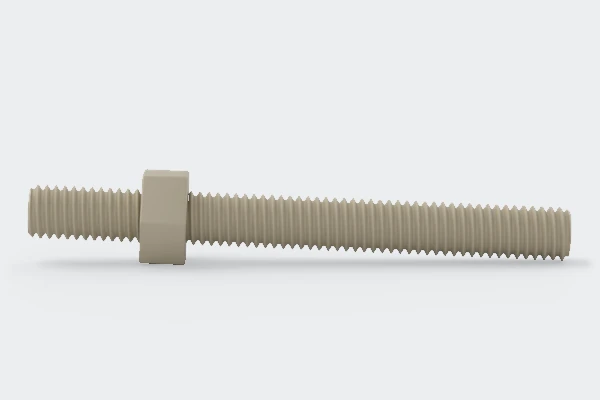
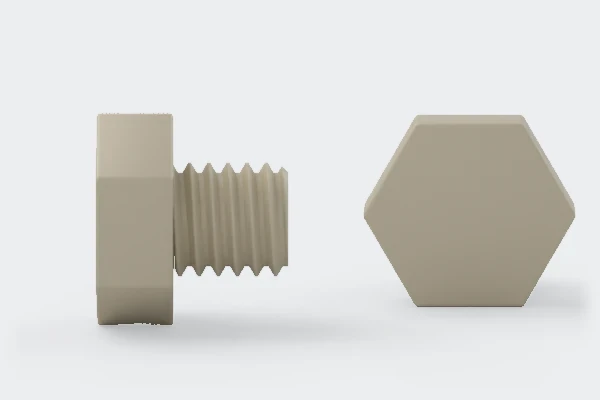
Examples PTFE / Polytetrafluoroethylene - Bolts, Nuts & Washers PTFE / Polytetrafluoroethylene - Hexagon HeadPTFE hex head bolts offer extreme chemical resistance, low friction, and excellent thermal performance. Ideal for demanding industrial applications.